


FUE vs. FUT Hair Transplant: What to Choose?
November 20, 2025

Overview
- FUE and FUT are two leading hair transplant methods, each with unique approaches to restoring natural hair growth and addressing different levels of hair loss.
- Choosing the right technique depends on your coverage needs, scarring preferences, and recovery expectations.
For expert advice tailored to your situation, consult with Svenson Philippines for a personalized hair restoration plan.
There comes a point when hiding hair loss with hats, strategic hairstyles, or hair fibers just is not enough anymore. So it starts to affect not just how you look, but how you feel about yourself every day.
Before you know it, you’re browsing hair restoration choices and stumbling upon terms like FUE and FUT, stranger to their meanings. Then, that follows up with a question: which one fits your situation, budget, and expectations?
No worries anymore, because this guide is here to clear things up, whether you decide between FUE vs. FUT hair transplant that might suit you best.
Understanding FUE and FUT in Simple Terms
Follicular Unit Extraction (FUE) and Follicular Unit Transplantation (FUT) are two popular approaches to hair transplants. They are both effective ways to restore thinning areas, but they differ in how hair follicles are taken from the donor site and implanted into bald or receding areas.
FUT involves removing a thin strip of scalp from the back of the head, which is then divided into small grafts for transplanting. It’s great for covering bigger spots in one session, but leaves a fine linear scar.
FUE, on the other hand, extracts individual hair follicles straight from the scalp using tiny, circular punches. It’s less invasive, leaves no recognizable linear scar, and allows for faster healing.
Key Differences Between FUE vs. FUT Hair Transplant

When deciding between two hair transplant selections, it’s vital to understand what sets them apart. FUT and FUE aim to restore natural hair growth, but they differ in how hair is harvested, the recovery experience, and the outcomes you can expect.
Extraction Method
FUT eliminates a thin strip of scalp from the back of the head to harvest hair follicles. These follicles are then divided into grafts and implanted into thinning or balding spots.
Meanwhile, FUE collects individual hair follicles directly from the scalp using a small punch tool. This technique leaves no linear scar and is less invasive, making it a popular option for those who prefer minimal downtime.
Scarring Result
FUT leaves a narrow, parallel line scar on the donor area where the strip of scalp was eliminated. While it can be hidden under longer hair, it remains forever and may be recognized if the hair is cut short.
However, FUT creates tiny, dot-like scars where individual follicles are extracted. These little marks are barely present, especially as the surrounding hair grows back, which makes it suitable for those who prefer shorter hairstyles.
Healing and Recovery Time
Recovery time for FUT is a bit longer because of the incision made to eliminate a strip of scalp. Patients commonly need a couple of weeks for the wound to heal and for any tightness or discomfort to alleviate.
FUE provides a more immediate and comfortable recovery since it utilizes little, circular punches to extract hair follicles. Some individuals can return to regular activities within a few days, with minimal visible signs of the procedure.
Ideal Candidate Coverage
FUT is commonly suggested for those with more advanced hair loss who need maximum grafts in a single session. It’s great for patients prioritizing fuller coverage in one process, and they aren’t overly concerned about a narrow scar.
FUE, on the other hand, works best for people with mild to moderate hair thinning or those who prefer a less invasive choice. It’s also famous for individuals who like to keep their hair short, as it leaves no linear scar.
Graft Volume and Session Yield
When a huge number of grafts are necessary in a single session, the strip method provides a higher yield since more follicles can be harvested at once. This has been a practical selection for covering broad areas of thinning or baldness effectively.
Aside from that, individual extraction procedures gather fewer grafts per session due to their meticulous, one-by-one process. While it may call for numerous sessions for extensive coverage, it allows for greater precision in placing grafts where they’re most needed.
Who Needs FUE and FUT Hair Transplants?

Selecting between FUE vs. FUT hair transplants depends on your hair loss pattern, scalp situation, lifestyle, and personal objectives.
Individuals with early to moderate thinning or those who prefer short hairstyles usually opt for individual extraction due to its minimal scarring. Meanwhile, people with severe hair loss requiring maximum coverage in a single session are better suited for the strip procedure.
But on top of that, a proper consultation remains essential to evaluate your condition and determine the technique that matches your needs and expectations best.
Above All Else, Seek Consultation First with Svenson Philippines Today!
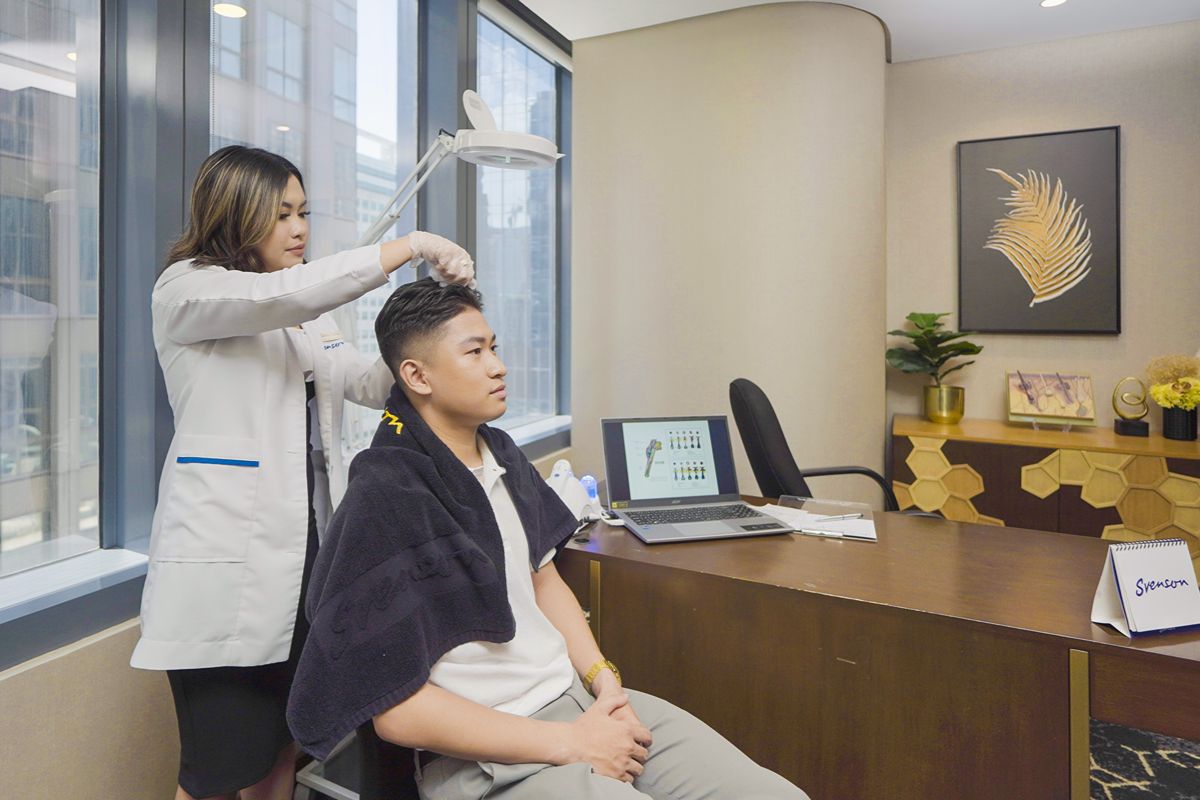
At the end of the day, the best way to know which hair transplant method suits you is through an expert, customized consultation.
At Svenson Philippines, our team takes the time to analyze your scalp, hair loss pattern, and personal goals before suggesting the correct treatment plan.
To know more about that, book a consultation with us today and start your journey to thicker, natural-looking hair with confidence.
Key Takeaway
If you’re considering a hair transplant, don’t leave it to guesswork—let the specialists guide you. Visit Svenson Philippines for a personalized consultation and learn about the safest, most adequate solution for your hair restoration needs. Reach out to us today and book your appointment to start your journey toward a confident life!
Related Blogs
July 15, 2026
How Professional Hair Transplant Procedures Deliver Natural Results
Learn how professional hair transplant procedures deliver natural results and discover Svenson's advanced hair restoration solutions.
Read More


July 11, 2026
Key Factors in Selecting a Trusted Hair Restoration Provider
Discover the key factors in selecting a trusted hair restoration provider and learn how Svenson delivers personalized hair restoration solutions.
Read More

July 8, 2026
How Advanced Scalp Treatments Improve Hair Follicle Activity
Learn how advanced scalp treatments improve hair follicle activity and how Svenson supports healthier hair growth.
Read More