


Is Hair Follicle Regeneration Right for You? Key Factors to Consider
January 26, 2026

Overview
- Hair treatments can help improve hair thinning issues, but their efficacy still depends on several key factors. Understanding your hair’s growth patterns, scalp health, and lifestyle habits can reveal whether advanced therapies may help.
- By evaluating these elements carefully, you can choose an approach that protects long-term hair health. Svenson provides professional assessments to guide each step of your personalized hair care plan.
Thinning hair and receding hairlines can raise understandable concerns about your overall health and appearance. It’s natural to consider whether targeted support can help prevent more loss.
Among the available solutions, follicle therapy is one of the most advanced—but is hair follicle regeneration right for you?
When approached with expert guidance, it can be. Svenson provides careful assessments and informed recommendations to improve outcomes for your scalp’s condition.
Key Factors to Consider Before Starting Treatment
 The success of hair therapy depends on several important factors that may affect how your follicles respond to treatment. Knowing these upfront allows you to follow the right care plan for the best results.
Underlying Causes and Diagnosis
Hair follicles grow weak for different reasons, and each cause influences how they respond to treatment. Genetic factors, such as androgenetic alopecia, can make follicles produce thinner hair, while conditions like thyroid imbalances can temporarily reduce hair density.
Understanding the cause of hair thinning provides insight into which therapy is likely to work best. Specialists can examine your scalp and hair patterns to pinpoint underlying factors, guiding a more precise approach. This helps set realistic expectations and ensures that any subsequent therapy aligns with your unique hair profile.
Stage and Type of Hair Loss
Regeneration treatments work best when you have dormant, but functional hair follicles. Dormant follicles still contain living stem cells and a growth center that sends signals and nutrients to help new hair grow. Together, these structures make it possible to reactivate the follicles and produce thicker, healthier hair.
Those with complete baldness or scarring alopecia often lack the living cellular “seeds” needed to support regeneration. This means that most forms of treatment may largely be ineffective on scalps where follicles are no longer accessible. Since treatments like Platelet-Rich Plasma Therapy work by stimulating existing weakened follicles, they cannot create new hair in areas of total baldness.
Lifestyle and Commitment
Advanced treatments require significant time and maintenance to be successful. Many therapies require multiple sessions over months (e.g., PRP) or everyday use (e.g., low-level laser therapies) to see continuous progress. Depending on your lifestyle, you may need to adjust your routine and refine your habits to support ongoing improvements.
Smoking, high stress, and poor nutrition all contribute to poor blood flow to hair follicles, limiting the oxygen and nutrients needed for healthy hair growth. Addressing these habits can help create a better environment for treatments to work effectively.
Commitment to Non-Surgical Maintenance
Unlike one-time surgical transplants, hair follicle restoration is a continuous, multi-step process. Therapies such as laser stimulation or microneedling support the roots by keeping them active in the growth phase. However, their effectiveness relies heavily on consistency. Results build gradually over months, making follow-through essential for visible improvement.
It’s important to note that hair changes over time, and achieving full results requires patience. Professional guidance allows these treatments to be adjusted as needed. With ongoing care, you can maintain progress and protect the improvements you’ve already gained.
Financial Considerations
Hair follicle regeneration is considered a premium treatment because it involves a high level of clinical expertise and careful procedure planning. Treatments in established clinics follow precise protocols, from in-depth assessments by licensed trichologists to the use of advanced biologic therapies. These elements contribute to the quality of care you receive and the overall outcome of the procedure.
While it may come with a higher cost, the investment reflects the level of professional attention and science-based methods involved throughout the process, helping support more consistent and well-managed outcomes.
Who Might Not Be a Good Candidate?
Hair follicle regeneration may not be suitable if hair loss has progressed to a point where the roots are no longer viable. Certain medical diagnoses or unresolved scalp concerns may also limit how well existing follicles respond to treatment.
Individuals with the following conditions may have to consider alternative solutions:
- Complete Baldness
- Scarred Scalp
- Certain Autoimmune Conditions
Common Follicle Regeneration Approaches
The best method depends on your hair loss pattern and scalp condition. Each therapy works differently. Some focus on improving blood flow, while others focus on “waking up” growth signals in your hair roots. A professional assessment helps determine which option offers the best potential for improvement.
Some effective solutions include:
- Platelet-Rich Plasma (PRP) Therapy
- Stem Cell Therapy
- Laser Hair Accelerator
- Low-Level Light Therapy
- Hair Transplant
Book a Hair Treatment Consultation at Svenson

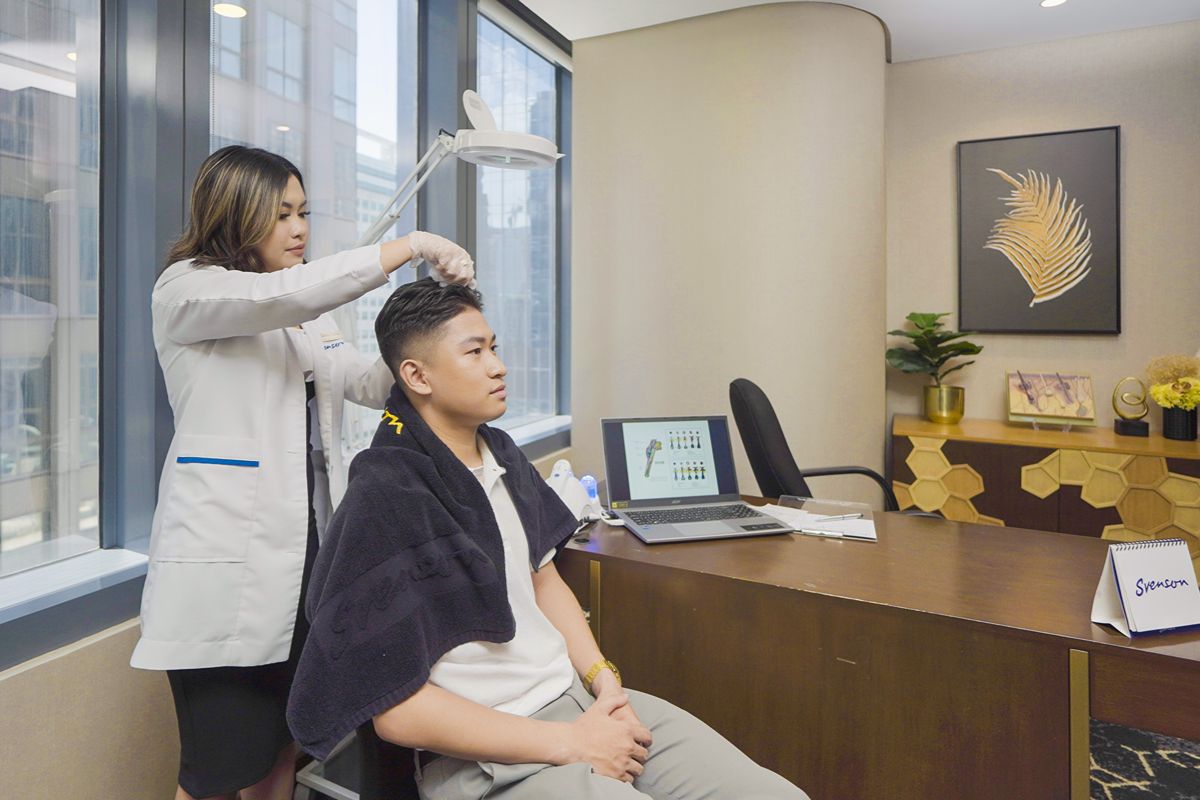
Svenson specializes in helping you understand and support your hair’s health. We assess your scalp and follicle health to determine the best treatment for your condition. With some of the best trichologists in the field, we assess hair growth patterns and create a plan suited to your specific needs.
From your first consultation to ongoing monitoring, we ensure all treatments are discreet, precise, and designed to achieve long-term improvements.
We offer the following therapies depending on your hair profile:
- L-Plus – Shortens the hair’s resting phase so follicles stay in the growth phase longer.
- Laser Hair Accelerator – Uses low-level therapy to boost nutrients and accelerate hair production.
- Vitex-17 – Improves hair density by providing nutrients for healthy growth.
Key Takeaway
So, is hair follicle regeneration right for you? When several factors align, it can be highly effective. Understanding your hair’s unique condition and needs provides great insight into how this approach may deliver the best results for you.
Working with a trusted clinic like Svenson gives you the best chance to achieve natural, long-lasting improvements. Book a consultation today to start your personal assessment.
Related Blogs
July 15, 2026
How Professional Hair Transplant Procedures Deliver Natural Results
Learn how professional hair transplant procedures deliver natural results and discover Svenson's advanced hair restoration solutions.
Read More


July 11, 2026
Key Factors in Selecting a Trusted Hair Restoration Provider
Discover the key factors in selecting a trusted hair restoration provider and learn how Svenson delivers personalized hair restoration solutions.
Read More

July 8, 2026
How Advanced Scalp Treatments Improve Hair Follicle Activity
Learn how advanced scalp treatments improve hair follicle activity and how Svenson supports healthier hair growth.
Read More