


What Can I Do to Strengthen My Fragile Hair
January 8, 2026

Overview
- Many factors contribute to weak strands, from frequent heat styling and harsh chemicals to poor diet, stress, and scalp health issues.
- In this guide, we’ll walk you through the causes of fragile hair, effective daily practices to protect your strands, and how specialized solutions like those offered by Svenson can help restore strength, resilience, and shine.
Having healthy, strong hair is something many of us want. However, daily exposure to heat styling, stress, and even changing weather can leave strands dry, dull, and prone to breakage.
Fragile hair often starts with subtle signs—excessive shedding, split ends, or a rough texture that makes styling more difficult. The good news is that with the right care, you can revive your hair’s strength and protect it from further damage.
If you’ve been wondering what you can do to strengthen fragile hair, this article will walk you through practical tips, nourishing habits, and professional treatment options. With the right approach, you can restore resilience to your strands and keep them looking healthier every day.
Hair Care Practices

Strengthening fragile hair requires consistency and the right habits. By making small changes to how you care for your hair daily, you can protect it from further damage and gradually restore its resilience, shine, and strength.
Here’s how you can start building healthier hair care practices.
Be Gentle
Fragile hair needs tenderness, so the way you handle it makes a huge difference. Start by brushing gently with a wide-tooth comb or a soft-bristle brush, especially when your hair is wet, as that’s when it’s most vulnerable to breakage.
Avoid rough towel drying; instead, pat your hair gently with a microfiber towel or let it air-dry whenever possible. Even small habits like sleeping on a silk pillowcase or tying your hair loosely with a fabric scrunchie can minimize unnecessary friction and pulling.
Limit Washing
Washing your hair too often can strip it of its natural oils, leaving it drier, weaker, and more prone to breakage. Washing 2–3 times a week is usually enough to keep your scalp clean without over-drying your strands.
On non-wash days, you can use dry shampoo to refresh your roots and keep your hair looking fresh. When you do wash, make sure to rinse thoroughly with lukewarm water rather than hot, as heat can further dehydrate your hair. By spacing out your washes, you allow your scalp’s natural oils to nourish your strands, creating a healthier environment for growth.
Use the Right Products
The products you choose play a vital role in how well your fragile hair can recover. Look for shampoos and conditioners that are sulfate-free, paraben-free, and enriched with nourishing ingredients like keratin, biotin, or natural oils like argan, coconut, or jojoba.
These formulas are gentler on your scalp and provide the nutrients your hair needs to rebuild strength and elasticity. Avoid products with harsh alcohols or heavy silicones that may weigh your hair down or dry it out. You might also consider leave-in conditioners or strengthening serums that provide ongoing hydration and protection throughout the day.
Avoid Heat
If you love styling your hair, it can be difficult to let go of heat tools like straighteners, curling irons, or blow dryers. But when hair is fragile, too much heat can cause split ends, dryness, and breakage.
Instead, try to embrace heat-free styling techniques such as braiding your damp hair for waves or using rollers for curls. When you do use heat tools, always apply a heat protectant spray first and keep the temperature on a lower setting to minimize damage. You can also consider limiting your use of heat to special occasions rather than daily styling.
Protect from Chemicals
Chemical treatments like bleaching, coloring, perming, or relaxing can significantly weaken fragile hair. The harsh ingredients used in these processes strip your hair of natural proteins and moisture, leaving it brittle and prone to breakage.
If you love coloring your hair, opt for gentler alternatives such as ammonia-free dyes or semi-permanent tints that are less damaging. Also, keep in mind to space out chemical treatments to give your hair time to recover in between. You can also protect your fragile hair by incorporating strengthening masks or bond-repair treatments after any chemical process.
Use Targeted Treatments
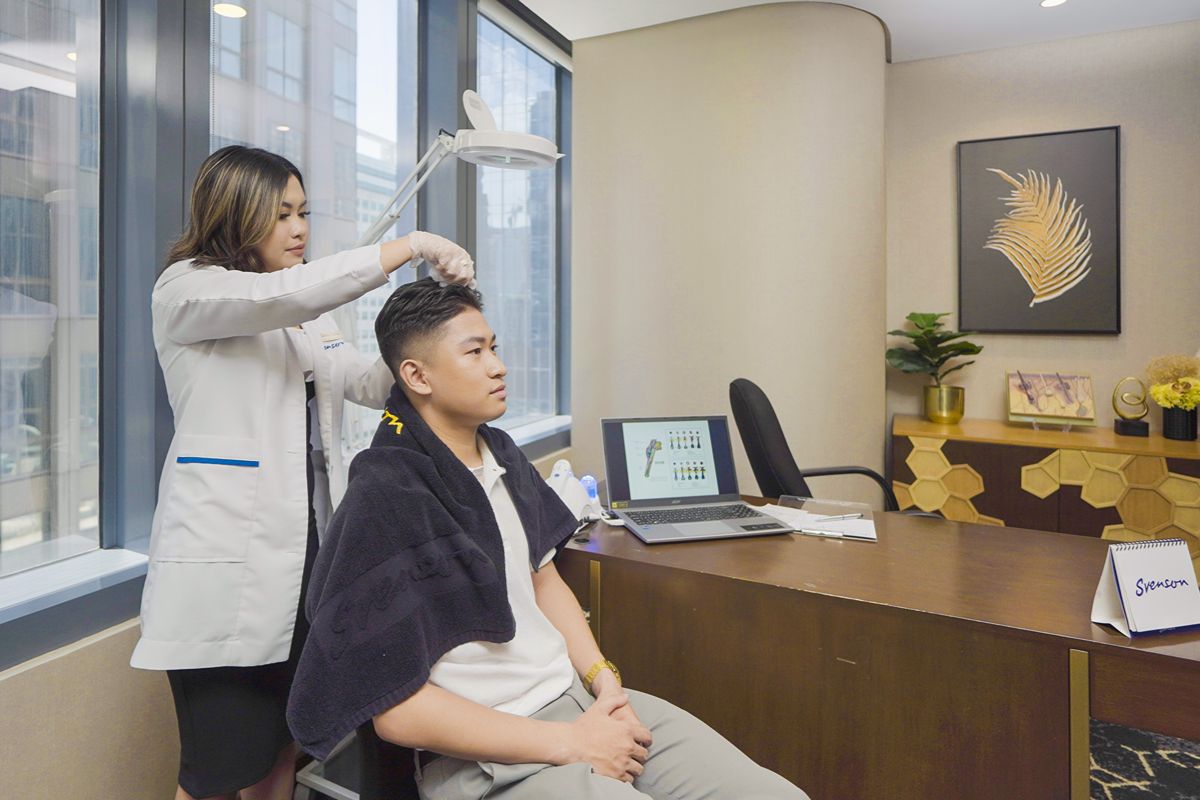
Sometimes, fragile hair needs more than just home care; it may require targeted treatments to rebuild strength and stimulate healthier growth. At Svenson, our Low-Level Laser Therapy (LLLT) is a non-invasive option for improving scalp health and encouraging hair regrowth.
It works by using light energy from low-level lasers or LEDs to penetrate the scalp and stimulate your hair follicles, improving circulation and boosting cellular activity. This process helps fragile hair become stronger, thicker, and healthier over time.
However, every scalp is unique, so it’s important to consult our certified trichologists and specialists who can assess your condition and recommend the treatment best suited to your needs.
Diet and Nutrition
You can also strengthen your fragile hair from the inside by nourishing it with the right foods.
- Eat protein-rich foods – Include eggs, fish, lean meats, beans, and nuts in your meals to give your hair the protein it needs to grow stronger.
- Increase vitamins and minerals – Add foods rich in biotin, zinc, iron, and vitamins A, C, D, and E to support healthier, more resilient hair.
Causes of Fragile Hair

Here are the common causes that can weaken your strands and make your hair more fragile:
- Heat styling and chemical treatments – Overuse of dryers, irons, dyes, and perms strips hair of moisture and weakens it.
- Poor diet and lack of nutrients – Missing protein, vitamins, and minerals leaves hair fragile and breakage-prone.
- Stress and hormonal imbalance – Stress or hormonal shifts can disrupt growth and cause thinning.
- Environmental factors – Sun, pollution, and harsh weather dry out hair and make it brittle.
- Scalp health issues – Dandruff, buildup, or infections can harm follicles and weaken hair.
Key Takeaway
When it comes to caring for your hair, small, consistent changes can make a big difference in restoring strength and resilience. Remember, patience and proper care are key to seeing long-term results. Knowing the answer to “what can I do to strengthen fragile hair” empowers you to take better control of your hair health and boost your confidence.
At Svenson, we specialize in customized treatments designed to strengthen and restore fragile hair. Book a consultation today and take the first step toward healthier, stronger, and more beautiful hair.
Related Blogs
July 15, 2026
How Professional Hair Transplant Procedures Deliver Natural Results
Learn how professional hair transplant procedures deliver natural results and discover Svenson's advanced hair restoration solutions.
Read More


July 11, 2026
Key Factors in Selecting a Trusted Hair Restoration Provider
Discover the key factors in selecting a trusted hair restoration provider and learn how Svenson delivers personalized hair restoration solutions.
Read More

July 8, 2026
How Advanced Scalp Treatments Improve Hair Follicle Activity
Learn how advanced scalp treatments improve hair follicle activity and how Svenson supports healthier hair growth.
Read More